
See how employers like British Airways and Tesco are reaching people who never searched for the role, cutting job board waste and making better fit decisions before the offer.
More applications can make a weak process busier without making the workforce stronger.
Job boards, one-click applications and AI-generated CVs create more volume but not more certainty. Strong candidates get buried, managers wait longer for a reliable shortlist and the same vacancy returns to the top of the funnel.
Search-led advertising only reaches people who already know the role exists and what to search for.
Candidates apply without a realistic picture of shifts, pace and environment, then withdraw once it lands.
Screening produces opinions late instead of consistent evidence early, so shortlisting slows down.
The role gets filled, then refilled, absorbing the budget that was meant to fill something else.
of candidate screening and decision-making time saved for every ten entry-level roles across care and hospitality.
A practical diagnostic for recruitment, resourcing, HR and operational leaders responsible for high-volume frontline hiring.
Serve the role instead of waiting to be searched for.
Make the reality of the role visible before people apply.
Get useful evidence early instead of friction late.
Measure cost per retained hire, not cost per hire.
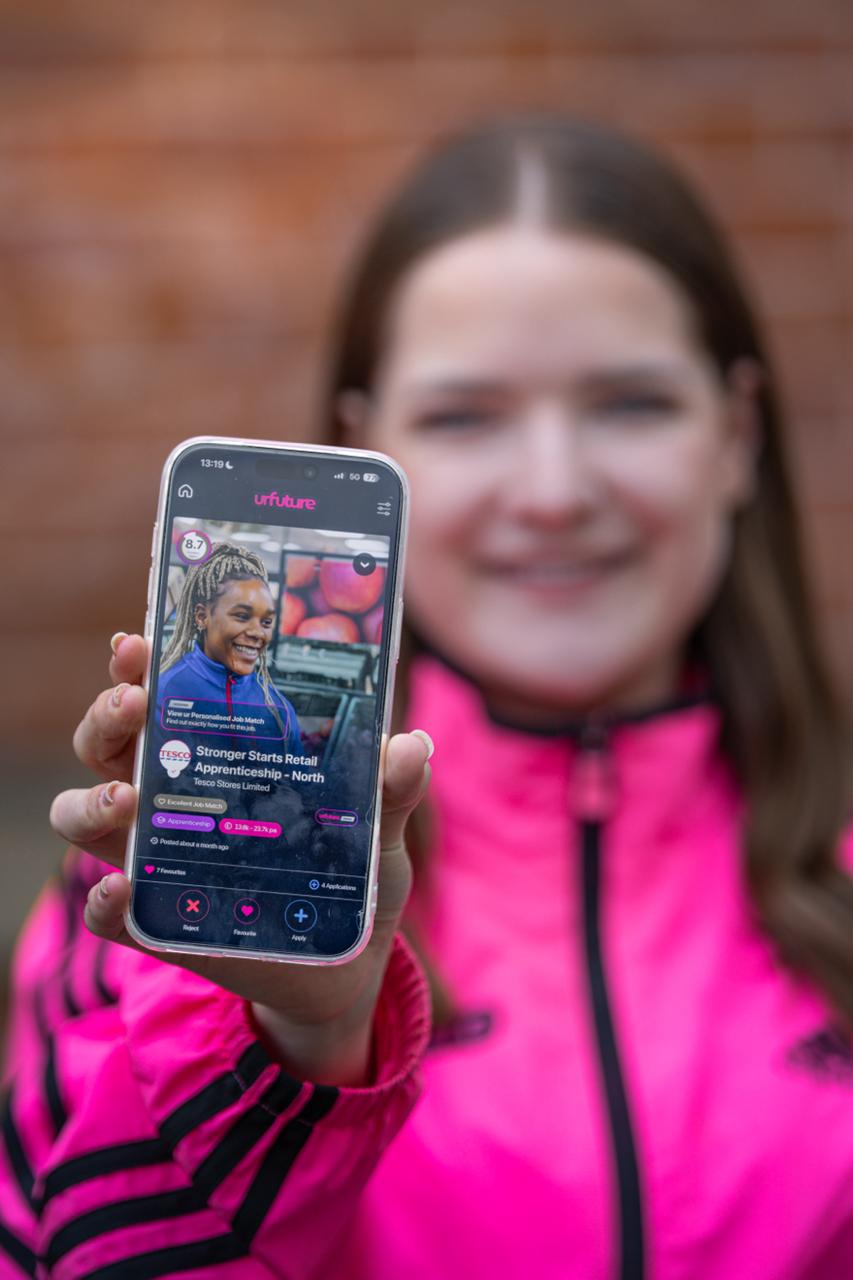
Initially hesitant to use a new platform, Sanctuary Care posted 11 roles. All 11 were filled by candidates from urfuture.
With Job Match Scores showing role fit upfront, Novia Group could progress urfuture candidates immediately without separate application screening calls.
For entry-level roles across care and hospitality, HIT Training reported 18.3 hours of candidate screening and decision-making time saved for every ten roles.
See how to reach people who understand the job, identify genuine fit before manual screening and improve the likelihood that hires turn up and stay.
urfuture resources have been downloaded by teams at organisations including
A quick guide to who it is for, what it covers and how the supporting evidence should be understood.
It is for recruitment, resourcing, HR and operational leaders responsible for hiring frontline employees at volume.
The examples span care, retail, transport, food manufacturing, warehousing, hospitality and energy services. The four challenges apply wherever roles are open to applicants regardless of experience, hire at volume and depend on people staying long enough to become productive. The pressures differ in scale between sectors, but the points where cost per retained hire is won or lost are consistent.
It focuses on four challenges: attraction efficiency, applicant suitability, hiring speed and early retention. Each section explains what creates the problem, what stronger hiring processes do differently and where to start.
No, they work together. The playbook explains the four challenges and what stronger hiring processes do differently. The audit takes five minutes and tells you where your own process currently sits against those same four areas, so you can see which section is most relevant to you. You can use either on its own.
Yes. High application volume does not necessarily produce suitable candidates or a reliable shortlist. The playbook is designed to help employers improve who discovers the role, what candidates understand before applying and the evidence available before manual screening.
No. Start with the challenge creating the most pressure in your hiring funnel, then use the other sections when they become relevant.
No. It helps you identify where process weakness may be creating waste, delay or repeat hiring, but it does not calculate what those issues cost your organisation.
It comes from three places: conversations with employers hiring frontline teams at volume, campaign results from our own client work with employers including British Airways and Tesco, and examples shared with us by employers across care, retail, transport and manufacturing. Where an employer example is used, it reflects what that organisation told us about its own hiring, not a modelled estimate.
We will email the playbook to the work email address you provide. You can use it independently, and there is no obligation to book a call.
